 English
 Français
 Español
Due Process consultation
The INPRF is seeking feedback on its draft INPRF Due Process by 20 November 2026. Building on the approach used by the IFR4NPO project, the draft sets out the transparent, evidence-based process that will guide the maintenance and future development of INPAS and Practice Guides as well as resources to support adoption and implementation. Stakeholder feedback will help ensure this work continues to be carried out through a robust and credible process that serves the public interest.
View the Due Process consultation
IFR4NPO Project Due Process
Due Process was essential to building trust in INPAS and Practice Guides. It ensured they were developed transparently, understood by stakeholders, and ready to be confidently adopted as a trusted international standard.
The Due Process was iterative: proposals were developed, tested, refined, and finalised having taken account of input from the community and experts.
Responses to Consultation Papers and Exposure Drafts were analysed and then cycled back through the process until the final guidance was approved.
This diagram visualises the Due Process approach followed by the IFR4NPO Project during the development of the first edition of INPAS.

Consultation by IFR4NPO Project
Consultation, outreach and feedback from the public were integral to the development of the first edition of INPAS by IFR4NPO. This was so that the perspectives of those affected by or using INPAS can be considered in the development of the standard. Consultation strengthened the credibility of INPAS and improveed its practicability.
- Un document de consultation a été publié en 2021 afin de recueillir des avis sur l’approche proposée et sur les principaux thèmes de l’information financière.
- Les commentaires ont orienté le programme de travail et les priorités de rédaction.
Analysis by IFR4NPO Project
Feedback from all sources was carefully considered to identify significant issues and recurrent themes in order to refine the proposals.
Analyse de la consultation et des commentaires du public
Les réponses au document de consultation et aux trois exposés-sondages ont été examinées en détail afin d’identifier les enjeux clés, les thèmes récurrents et les domaines nécessitant des clarifications.
Ces commentaires ont aidé à définir le programme de travail, ont guidé l’élaboration du contenu et ont orienté l’ordre et l’orientation des propositions dans l’ensemble du projet d’INPAS.
Analyse des contributions des experts
Insights from the IFR4NPO Project Technical Advisory Group (TAG) and Practitioner Advisory Group (PAG) were analysed alongside contributions from focus groups, webinars, and informal discussions with stakeholders across regions.
This input provided valuable technical and contextual perspectives, helping to refine the proposals and ensure INPAS would be practical and globally relevant.
Réponses à l’exposé-sondage 1
The questions in the Exposure Draft were numbered from 1a to 12d. They were phrased in the format:
« Do you agree that… If not, why not. »
The graph shows the percentage of respondents who agreed, with the green box highlighting areas with lower areas of support, and the white box detailing concerns that were addressed as a result of the feedback.
Consulter l’ES1 et les réponses
Réponses à l’exposé-sondage 2
The questions in the Exposure Draft were numbered from 1a to 12a. They were phrased in the format:
« Do you agree that… If not, why not. »
The graph shows the percentage of respondents who agreed, with the green box highlighting areas with lower areas of support, and the white box detailing concerns that were addressed as a result of the feedback.
Consulter l’ES2 et les réponses
Réponses à l’exposé-sondage 3
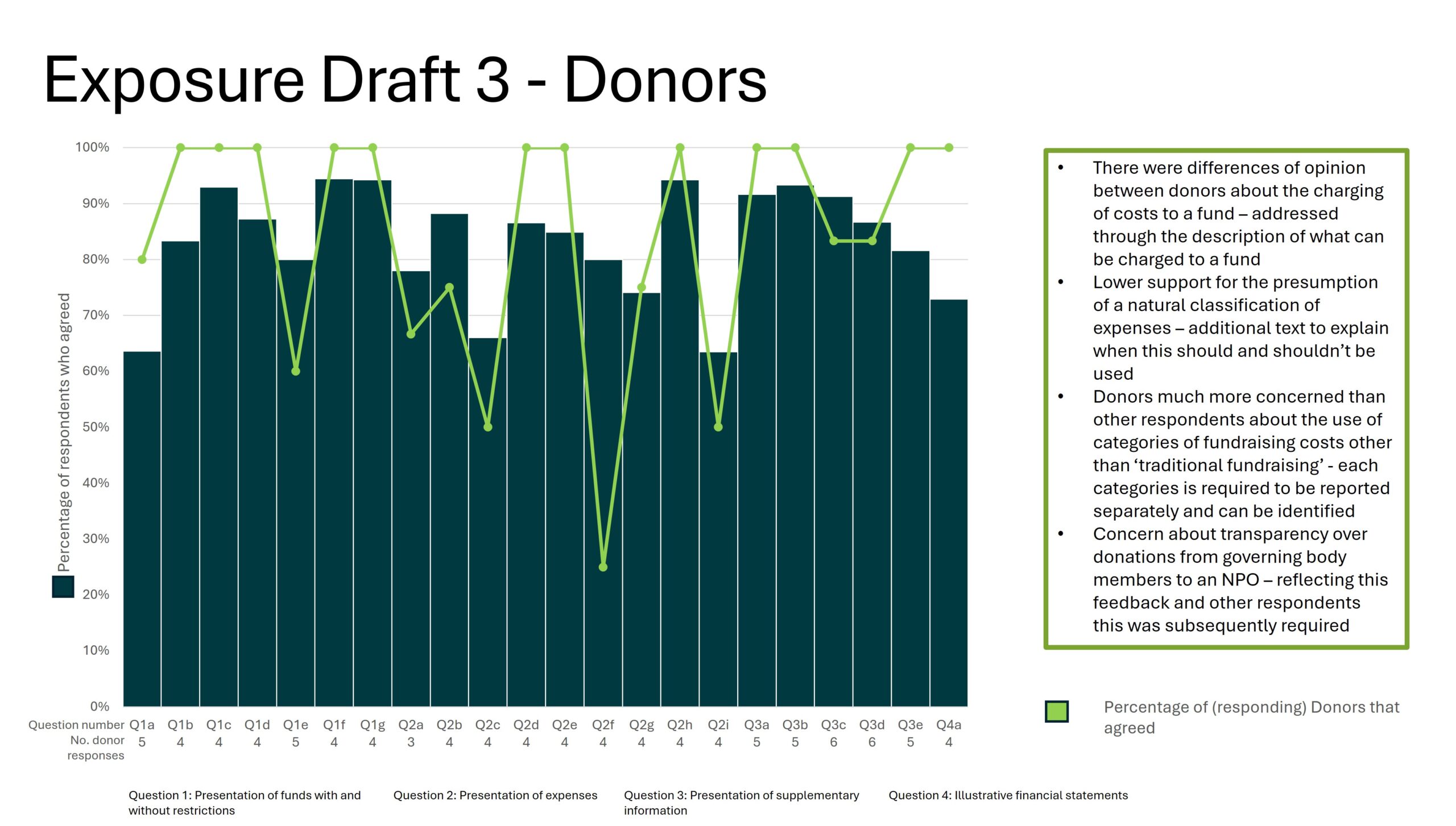
The questions in the Exposure Draft were numbered from 1a to 11b. They were phrased in the format:
« Do you agree that… If not, why not. »
The graph shows the percentage of respondents who agreed, with the green box highlighting areas with lower areas of support, and the white box detailing concerns that were addressed as a result of the feedback.
Consulter l’ES3 et les réponses
Advisory Groups Input
Expert guidance was provided by two standing groups:
- The IFR4NPO Technical Advisory Group (TAG), comprising national standard-setters and accounting experts. TAG members provided technical accounting knowledge.
- The IFR4NPO Practitioner Advisory Group (PAG), representing preparers, auditors, donors, and academics from the NPO community. PAG members provided real world knowledge and experience of the accounting challenges for NPOs.
- You can follow the links to view the papers and recordings of IFR4NPO TAG meetings and PAG meetings.
Groupes de discussion ciblés
Des groupes de discussion thématiques ont été organisés avec divers participants pour tester les propositions dans des contextes réels.
Engagement à travers le monde
Stakeholder engagement included:
- Webinars and outreach events
- Explanatory materials
- Staff papers and meeting summaries
- Publication of recordings and key points
Translated materials that supported each consultation and tailored outreach helped ensure strong representation from low- and middle-income countries in the first edition of INPAS.
Communauté
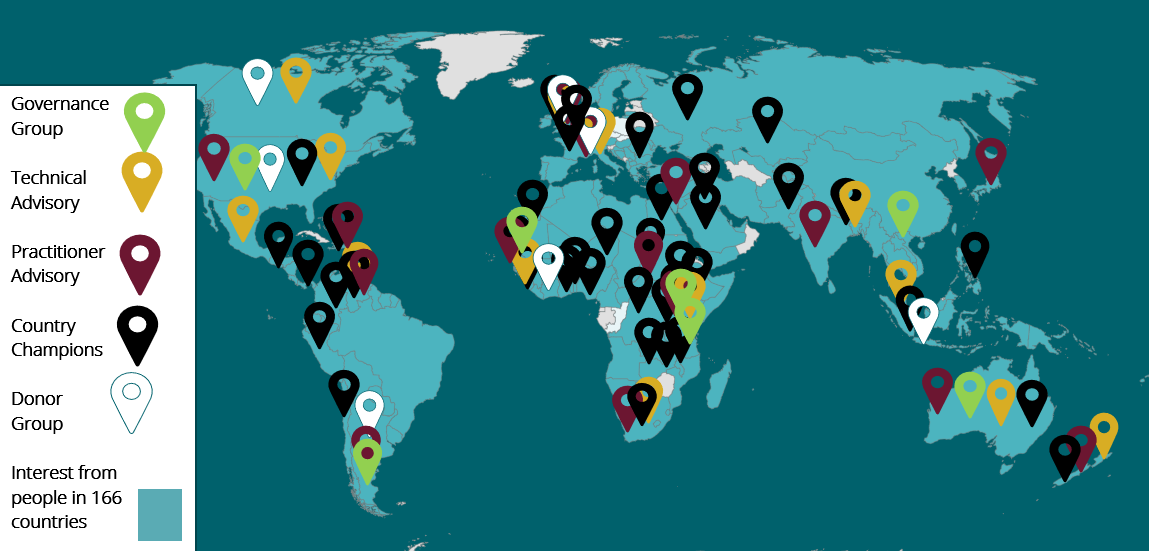
Through stakeholder engagement activities, the IFR4NPO project created a community of over 15,000 people from nearly 170 countries who subscribed to the newsletter or social media platforms
Engagement des donateurs
- The Donor Reference Group (DRG) provided input on how financial reporting standards affect funding relationships.
- This helped align INPAS with donor expectations and priorities.
Surveillance et approbation
The IFR4NPO Governance Group provided ongoing oversight of the due process, ensuring steps were followed and feedback addressed.
In approving the the first edition of INPAS in 2025, the Governance Group were able to rely on layered governance that provided rigour and integrity.
Approval by the Technical Advisory Group (TAG)
IFR4NPO TAG members voted overwhelmingly to approve the publication of INPAS.
An attestation by the Technical Director
The detailed attestation described the steps to draft and scrutinise INPAS during development of the first edition.
Approval of the due process by CIPFA’s professional standards board
The professional standards board of the Chartered Institute of Public Finance and Accountancy reviewed and confirmed that due process had been followed.